
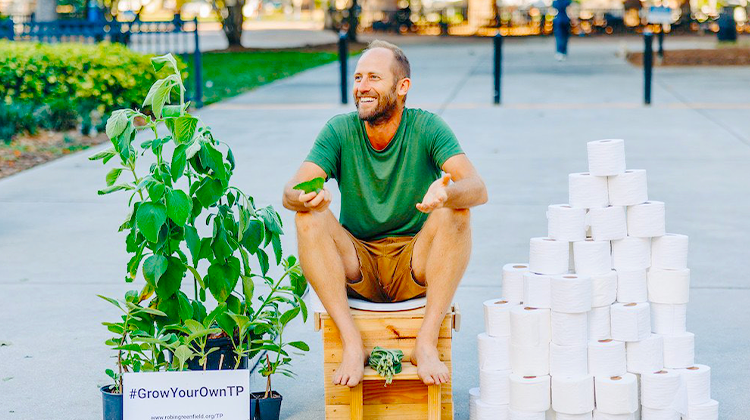
In Meru, a town in eastern Kenya, a lush, leafy plant sways over the landscape. Benjamin, a Meru resident, is growing the Plectranthus barbatus plant — not for food, but to use as toilet paper.
在肯尼亚东部梅鲁地区,一种枝叶繁茂的绿色植物正在微风中摇曳。当地居民本杰明种植这种名叫毛喉鞘蕊花的植物并非为了食用,而是作为厕纸的天然替代品。
Plectranthus barbatus is a leafy plant. Its leaves are roughly the size of an industrial toilet paper square and emit a minty, lemony fragrance. Covered in tiny hairs, they have a soft texture.
毛喉鞘蕊花是一种多叶植物,它的叶片大小与工业标准尺寸的厕纸相近,并散发着薄荷柠檬香气。其表面覆盖着细密绒毛,触感柔软舒适。
This plant has provided Benjamin with a cost-effective alternative to purchasing toilet paper. Like many commodities, the price of toilet paper has risen across Africa, largely due to the high cost of imported raw materials, such as wood pulp.
这种植物为本杰明提供了性价比极高的厕纸替代方案。与其他许多商品的情况类似,非洲地区厕纸的价格因进口木浆等原材料成本上涨而持续攀升。
The pulp and paper industry is the world's largest consumer of virgin wood. This is driving deforestation, soil erosion, and widespread ecosystem disruption. This plant has the potential to be an environmentally friendly alternative.
全球制浆造纸业每年消耗大量原生木材,导致森林锐减、水土流失以及生态系统破坏,毛喉鞘蕊花则提供了一种环保新选择。
But how realistic is it that this plant might become more widely used?
但推广这种植物的可行性高吗?
One drawback is that wastewater and disposal systems aren't designed to handle this type of paper, as only soluble items can be flushed through the system.
使用毛喉鞘蕊花叶当做厕纸的其中一个缺陷是:污水处理系统无法处理植物纤维。传统的污水和处置系统并非是为处理这类"纸张"而设计的,只有可溶性物质才能通过污水管道被冲走。
Greenfield, an environmental activist in the US, says that's where compost toilets come in. "The leaves go back to the earth and produce soil, which can then support food growth. It's a closed-loop system."
美国环保活动家格林菲尔德表示,这就是堆肥厕所出场的时候了。“这些叶子会回归土地并形成土壤,继而为粮食作物生长提供养料。这是一个闭环系统。”
There are also limitations on the locations where the plant can be grown. In South Africa, for example, it is regarded as an invasive species, and growing or selling it is banned.
该植物的种植地点也存在限制。例如在南非,它被视为外来入侵物种,被禁止种植或销售。
However, growing the plant in a controlled environment, within a designated area, and monitoring its growth to limit expansion into the existing ecosystem could help mitigate environmental risks.
不过,在可控的环境中种植,划定专门区域,并通过监测生长过程来限制这种植物向现有生态系统的扩张,可能有助于降低其给环境带来的风险。
Perhaps the biggest challenge to going mainstream remains public acceptance.
或许这种植物大规模推广应用面临的最大挑战仍是公众的接受度。